
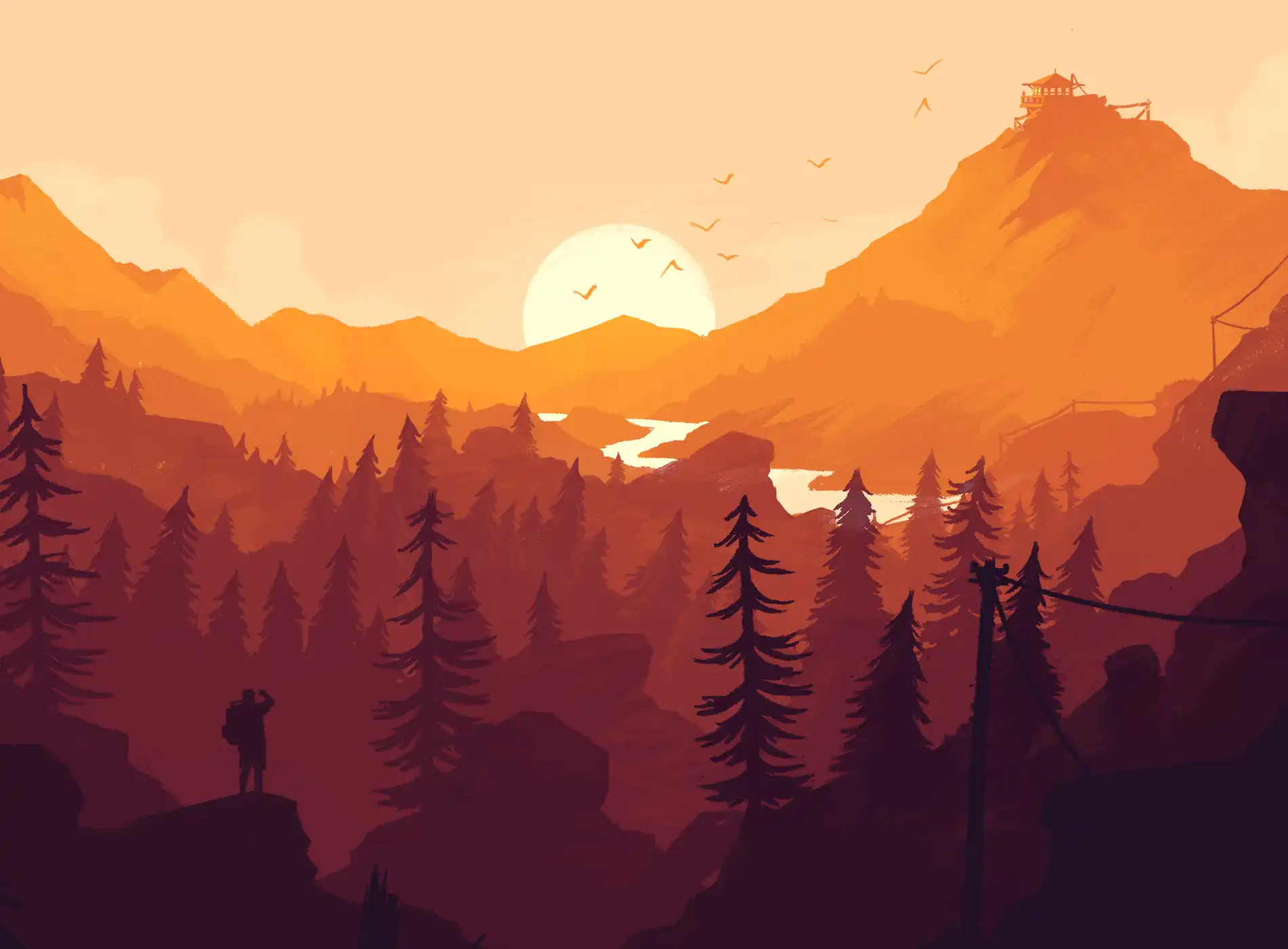
Before I start this piece on gaming, I must admit that I’m not much of a gamer. Beyond Tomb Raider and its chunky 1990s graphics, and now losing to my daughter at Mario Kart, my exposure to games is limited at best. So what follows isn’t the reflections of a serious gamer, not even a journeyman gamer, but someone who found a game that for some reason stuck around in his head.
Part 1: Firewatch, nearly a decade on
In February 2016, indie games developer Campo Santo released Firewatch, a first-person adventure that follows Henry in his role as a Wyoming fire lookout. On paper, Firewatch shouldn’t be a success. In fact, given its premise, it probably shouldn’t even be a game. But with its release, Campo Santo kicked off a slow-burning (sorry) cult classic.
In the game’s Audio Tour, developer Sean Vanaman recounts how they’d spoken to fire lookouts while doing their research, and they’d often ask: “Why would you make a game about that? That is the most boring time of my entire life.” While being a fire lookout does involve a lot of sitting around in a tower, truth be told, our Henry doesn’t spend too much time sitting, preferring to hike in the surrounding Shoshone National Forest, beautifully imagined by artist Olly Moss and the rest of the Campo Santo team.
Nearly a decade on, the r/Firewatch subreddit is still active, filled with new players, fan art, theories, and post-game reflections. The Steam forums are equally active. Even on Instagram, players post screenshots, character sketches, and game walk-throughs. This is after just one game and no follow-up from the studio. Campo Santo was acquired by gaming industry behemoth Valve in 2018, and though a successor game, In the Valley of Gods, was in development, it quietly faded away as the team dispersed onto other projects. It almost certainly won’t see the light of day. There was even talk of a Firewatch film, but that’s probably gone the same way.
Critics and reviewers liked what they saw of Campo Santo’s sole release in 2016. It picked up a string of awards and reviewers praised the artwork and audio, as well as the game’s emotional depth and character development, particularly the dialogue between Henry and his supervisor, Delilah. They were less enthusiastic about the game’s central mystery, seeing it as a bit of a MacGuffin, with some also pointing out the game’s limited interactivity and a conclusion that left players divided (of which, more later).
A lot of walking, and occasional talking
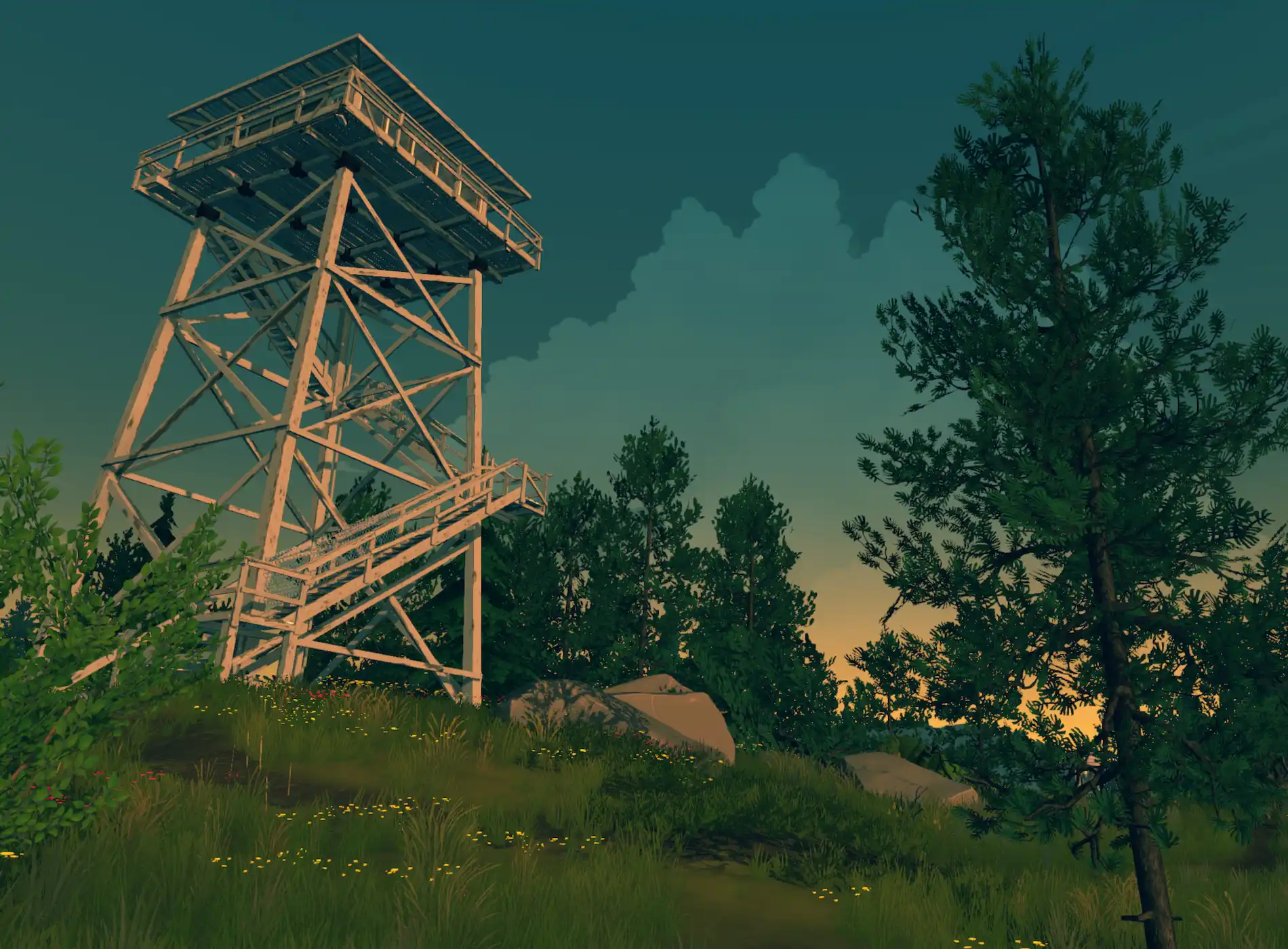
The game’s central character, Henry, is voiced by Rich Sommer, who you may know from Mad Men, among other acting credits. After his wife, Julia, develops early onset dementia, Henry takes up a job as a fire lookout (yeah, we’ll get to his abandonment later). Out in the deep wilderness of the Shoshone National Forest, Henry’s only other significant human contact is with his boss, Delilah (voiced by Cissy Jones), via radio. Henry’s actual job as a fire lookout is to sit in his tower and literally look out for fires. Although, as mentioned, Henry isn’t really one for sitting about, preferring to hike and fish in the surrounding forest. This bucolic existence is quickly thrown off by an encounter with a stranger. The game (and Henry) becomes increasingly paranoid and suspicious, with the once peaceful forest turning into a source of unease and tension as the mystery develops.
The gameplay is simple, with the player guiding Henry through the forest, where he has limited interactions with the environment — earning the game a place in the ‘walking sim’ debate (honestly, don’t go there). His most significant interactions are with Delilah, who will occasionally pop up on the radio, sometimes passing on useful information, other times just wanting a chat. Along with the artwork and the audio, it’s these conversations with Delilah that make the game stand out. Henry’s given options when he responds, which can have an impact on how his relationship with Delilah develops. His level of interaction guides Delilah’s. Respond a lot and give away a lot of information, and Delilah will do likewise; keep quiet and she’ll do the same. The conversations feel natural and unforced, particularly when the two are just shooting the breeze. There’s even a time where Delilah goes quiet and ignores Henry after he pisses her off, which only adds to the realism.
All this talking and walking around the forest does have a point as Henry works to solve a mystery, along with the detached assistance of Delilah, with whom he starts to form a personal bond. Whether it’s romantic or not is left up to the player to interpret, which is a common thread throughout the game, where plenty of questions are left unanswered.
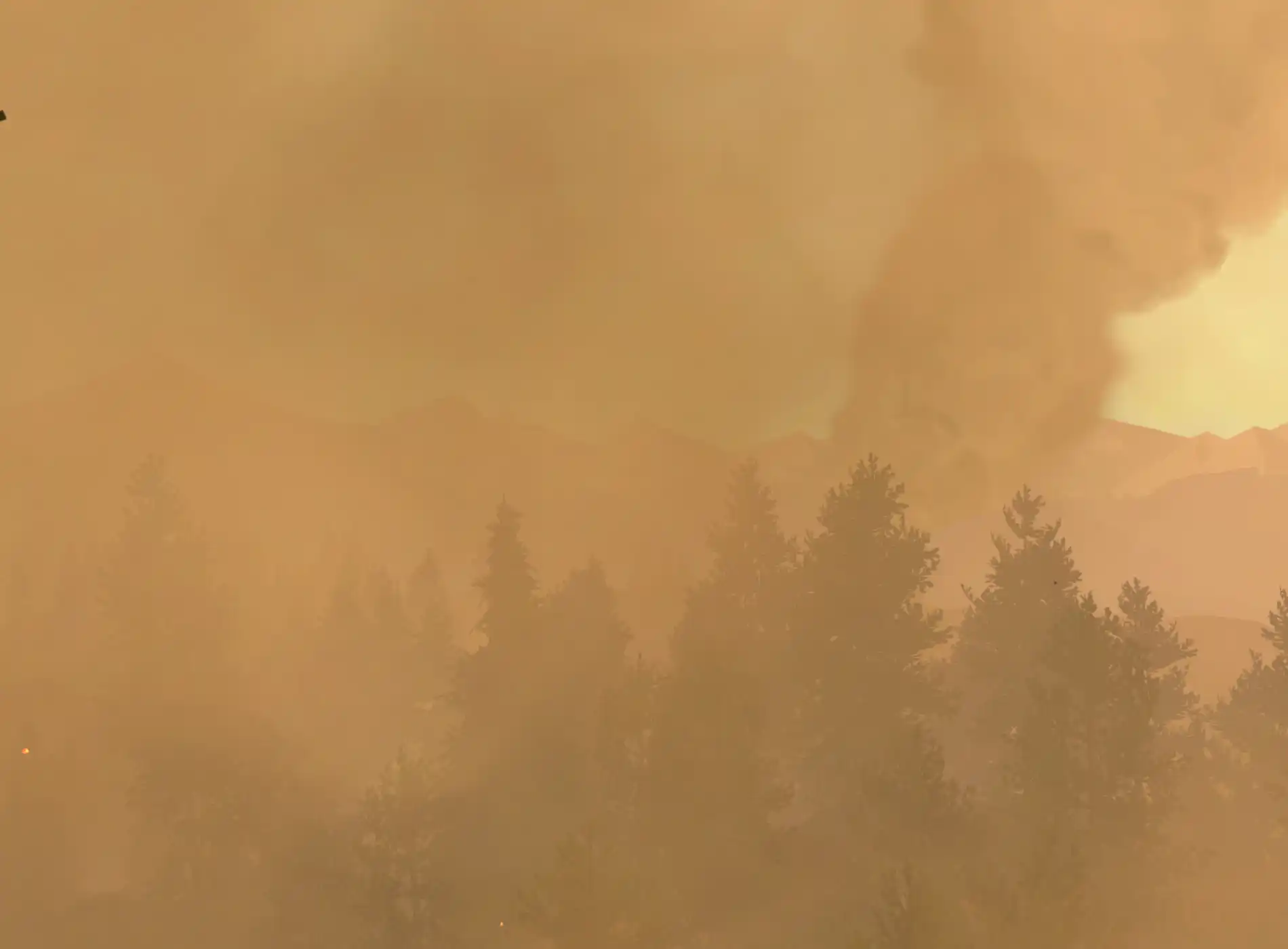
As Firewatch progresses, the sense of paranoia, fear, and suspense is amplified by a developing forest fire, which has the effect of increasing the urgency in the game and adding a sense of claustrophobia as the wide expanses and distant views are closed off by smoke and ash. With the mystery solved, it’s time for Henry to make it out of the forest before he’s engulfed, but there’s one last resolution before he does: meeting the person he’s been speaking to all this time.
Part 2: The game that wouldn’t burn out
The game’s ending is still a talking point on places such as Reddit and Steam, where new players pop up to ask advice or discuss the game in general. In fact, those places have developed into communities where users share fan art, walkthroughs, and indulge in a plethora of “what ifs”. The subreddit even has a pinned post of other games to play if you liked Firewatch, which is worth an exploration on its own.
These suggestions range from indie darlings like Gone Home and What Remains of Edith Finch, to meditative explorations like The Long Dark, Journey, and A Short Hike. The common thread is that they’re all narrative-first games where mood, atmosphere, and human connection (or a lack thereof) take centre stage. Like Firewatch, most of them put storytelling above action, and leave players with a lot of questions, and possibly a sense of wanting just a little more time in that world.
Which leads to the question: why does a one-off, decade-old game produced by a studio that disappeared so soon after its release have such a dedicated following in a way that other games do not? What is it about Firewatch that gets under people’s skin? I have theories.
The romance of the fire lookout
Being a fire lookout is a (mostly) solitary existence. Deep inside the forest, somewhat marooned in a high tower, you’re left with just your thoughts, and possibly a cat. The creative fascination with isolation has a long pedigree. From Defoe’s Robinson Crusoe to Caspar David Friedrich’s Wanderer above the Sea of Fog through to Duncan Jones’ 2009 science fiction drama Moon, artists have explored the impacts of isolation on the individual, or used it as a source of inspiration. Fire towers themselves hold a certain fascination for creatives, particularly authors. Jack Kerouac recounted his experiences as a fire lookout in Washington state in Desolation Angels and Lonesome Traveler. Following in Kerouac’s boots, journalist Philip Connors captured his experiences as a lookout in the Gila National Forest in Fire Season: Field Notes from a Wilderness Lookout. It speaks to the writerly desire to be left in peace to get on with their work.
Of course, while that might be the romantic ideal, it’s often far from the reality. Follow any fire lookout on Instagram, for example, and you’ll quickly see how regularly their solitude is interrupted by visitors, many of whom have been drawn to visit towers by Firewatch itself. In a Q&A many years ago, fire lookout Ashley Farinacci-Silfies (who goes by ashley_applethingy on Instagram) said she was asked about the game on an almost daily basis by visitors. She said she eventually played it out of curiosity, but found the experience odd and preferred the real thing.
The stopped clock
Firewatch is in what some players refer to as the Steam Graveyard: effectively abandoned in terms of development, with no significant updates, no follow-ups, no sequel. It just sits on Steam’s shelves, gathering digital dust, waiting for new players to discover it. With no new edition or downloadable content on the horizon, the focus for fans has become the one and only version of the game. The end result is a mix of active forums where new users come for advice, or to discuss the feelings the game brings about, while old hands offer advice or reminisce. Some express themselves through fan art, or by discussing the now-hypothetical film or follow-up game. With nothing to look forward to, Firewatch has become a sort of stopped clock, where nothing ever changes except the usernames of the people passing through the forums.
Part 3: The Firewatch legacy
The ongoing fascination with Firewatch is part of its legacy, and a lot of that fascination is driven by the world created by the Campo Santo team. It’s very much a game you feel, as much as see and hear.
The gameplay
A common theme that fans bring up when discussing Firewatch is the refreshing nature of the gameplay. It’s not competitive, nor is it aggressive. There are no ridiculously oversized weapons. No speeding cars. No explosions. No leaderboards. There’s just lots of … walking. The game is very much about the journey, with even the storyline becoming secondary at times. And as Henry wanders through the forest, his relationship with the disembodied Delilah strengthens and deepens as she opens up and tells him more about herself. For a lot of players, that gentle pace sets it apart from many other games, and gives replays real value. Some of the game’s early reviewers thought its limited interactivity meant there was little opportunity for repeat plays. But they missed the point. In Firewatch, it’s not so much about doing stuff, as it is about enjoying the world you’re in.
The visuals
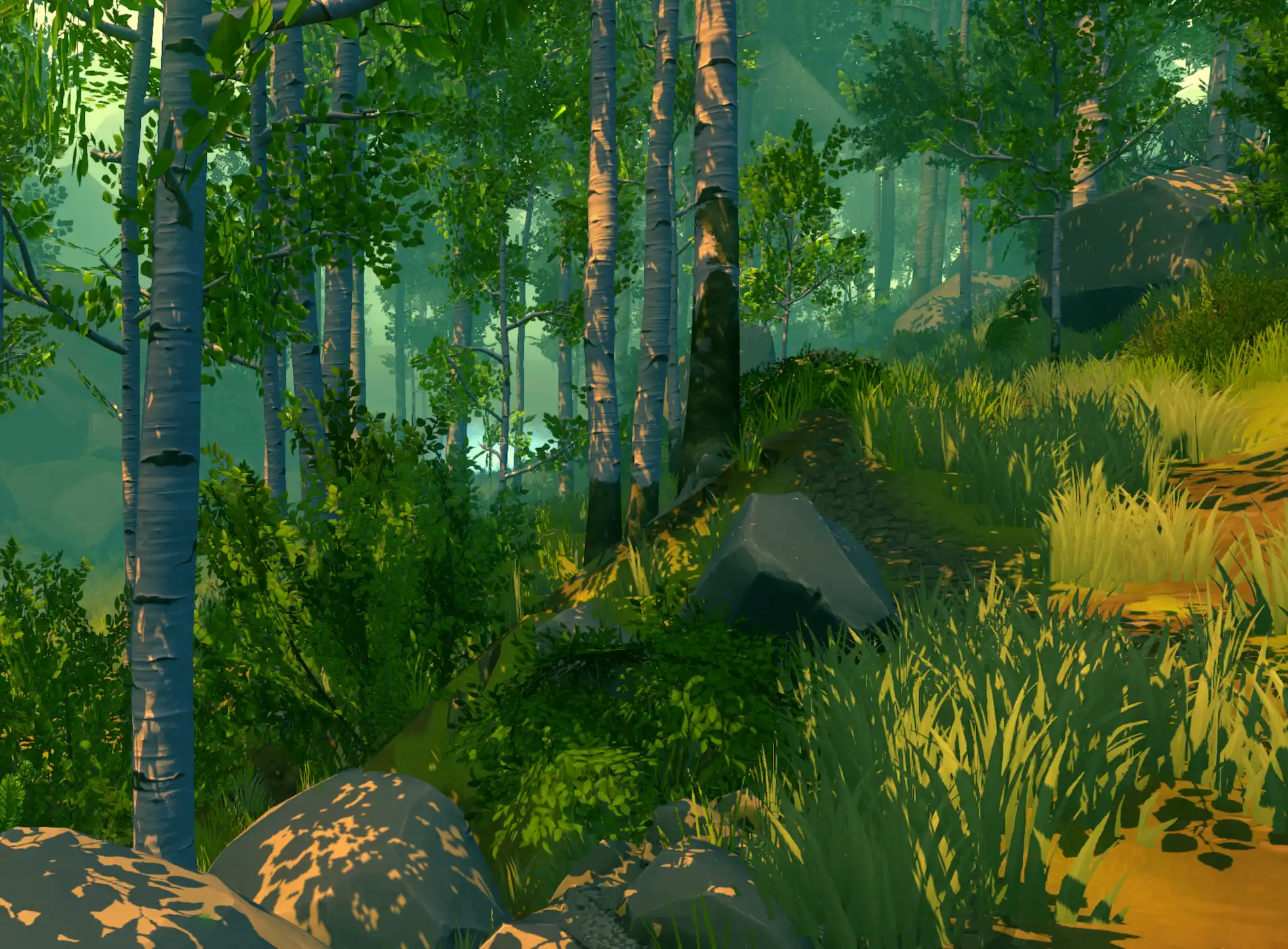
And that world is a lush, visually rich environment. The basis is the artwork of Olly Moss, who drew his inspiration from 1930s US National Parks posters. Wandering around the Shoshone of the developers’ imaginations really is like being inside a poster drawn up by the New Deal-era Works Progress Administration. But it’s more than that, Jane Ng and the team took Moss’ concepts and turned them into the lush environment of the game, going deep into the effects of light and fog on the environment. In a talk she gave while the game was still in development, Ng described how they used a visual distinction between the natural environment (rocks, trees, mountains) and the man-made items that were part of the gameplay.
The former was background — beautifully illustrated and rendered — but still background. The latter was where the real attention to detail went. The team wanted to create a world that Henry could realistically live in, which meant diving deep into the design and look of 1980s items such as typewriters, boom boxes, and even books (there’s a wide selection spread around the game). The distinction sends a subtle message to the player: the detailed items are potentially useful in the game. The rest is just pretty to look at.
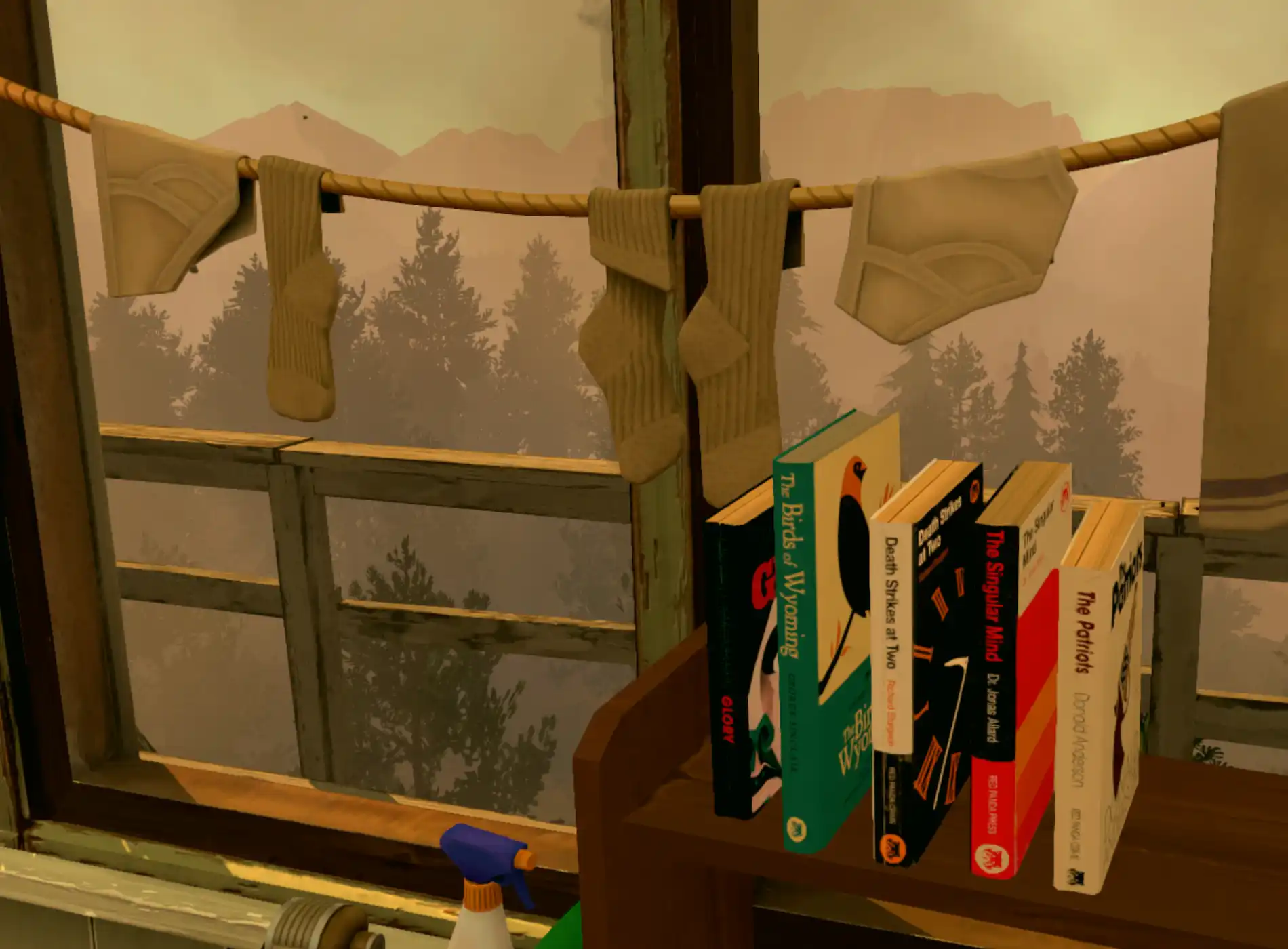
Of course, not every detailed item is useful. On his travels, Henry comes across notes left by two former lookouts (Ron and Dave) who seemed to maintain a relationship via literal text messages. The notes add precisely zero to the plot or the mystery. You can ignore them and finish the game. What they do add, however, is some detailed world-building. The forest and the lookout towers have a history. Henry isn’t the first person out there feeling alone, isolated, and maybe a little paranoid. It’s small touches like this throughout the game that help make it real and lasting.
As well as being beautiful, the style of artwork, which I can only describe as “painterly”, helps keep the game looking fresh. Since it’s a style that’s not aiming for hyper-realism as many games typically do, it doesn’t look dated as technology advances and rendering becomes more accurate. The game has an unreal, retro vibe baked into it, so the passing years have been kind.
The audio
World-building isn’t just about the visuals, sound plays a huge role, and Firewatch delivers here as well. From the wind rustling the leaves, to the crunch of gravel underfoot, to Henry’s laboured breathing (the job is probably doing wonders for his cardiovascular system), the detailed sound helps bring the forest alive. Then there’s Chris Remo’s score, which ranges from ‘relaxed chilling in the forest’ through to ‘something’s not quite right’ and ‘get me the frak out of here’. It’s used beautifully throughout the game to signal changes in atmosphere, just as the sunlight signals the passage of time.
Maybe it’s the already-established forest association, but the Firewatch soundtrack is my background music of choice for trail runs. In fact, while on a family holiday in California a few years back, I was running in Stanislaus National Forest one morning and realised that the music I was listening to was oddly appropriate. Of course, any contemplation on the matter was cut short when I remembered my mortal fear (bears) and returned to my hyper-vigilant state. Anyway, I digress.
In the Audio Tour, Jared Emerson-Johnson, who did a lot of the sound design in conjunction with Remo, described the project’s focus on ambient sounds to bring the forest to life. “We spent a whole lot of time figuring out how we wanted to sort-of differentiate each of the individual sections of the park. And also, at what point you're in the story, and how the ambiance should subtly change. It was probably the most detailed ambiance work I've done on I think any project I've ever worked on … just because it had to be so specific and subtle, but also evoke really clear tonal feeling across the game.”
The ending (Firewatch version)
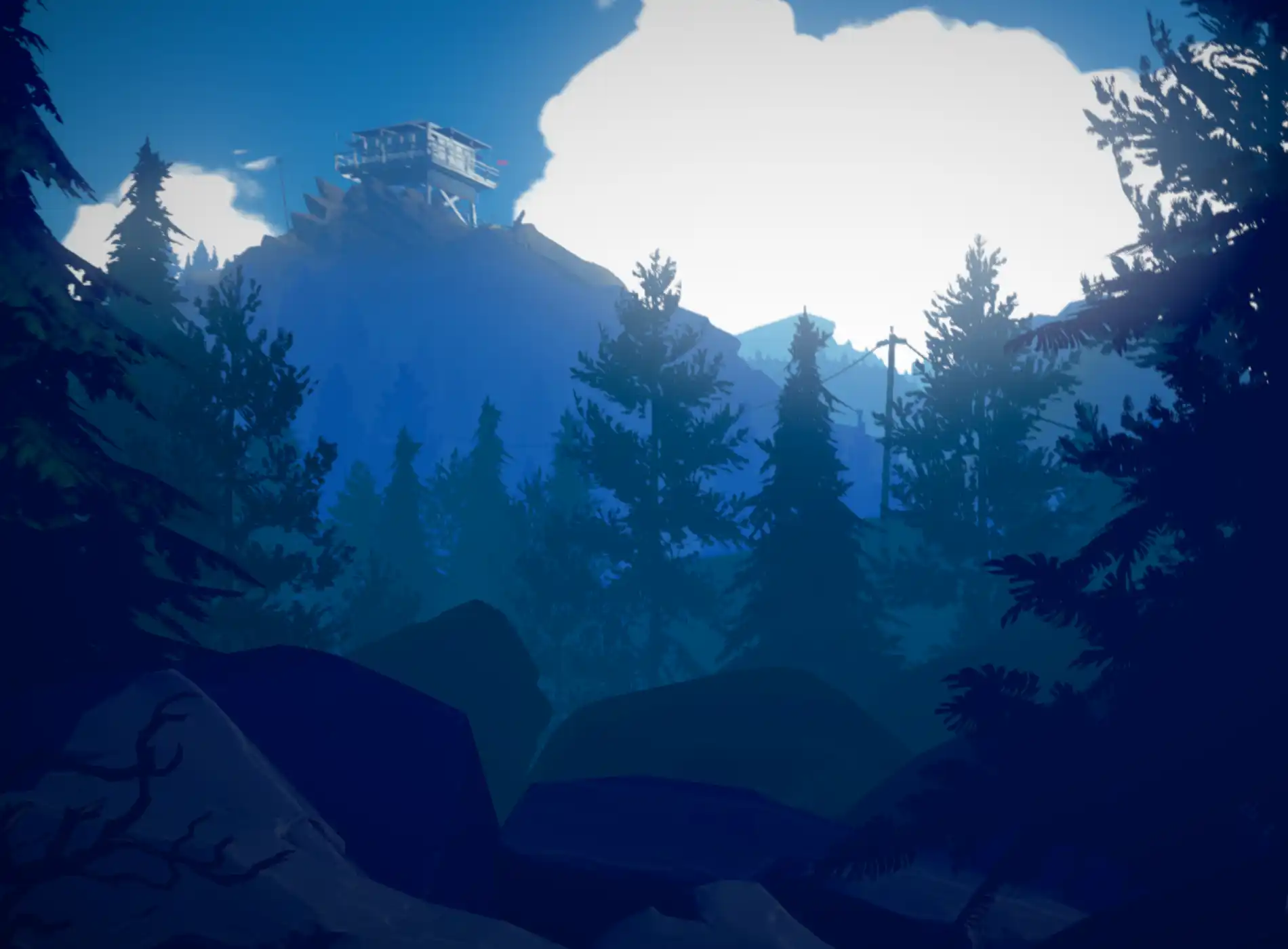
Spoiler alert: I’ll discuss the ending in detail here, so if you don’t want to know, skip along to the next heading. In my opinion the ending is not the one I wanted, but it’s the one the game deserves. Yes, I raced to the second lookout as the fire approached, naively thinking I’d get there in time to meet the person I’d been ‘speaking’ to throughout the game. And when I realised the lookout was empty I smiled and thought ‘well played’. Not only does it echo real life — things often don’t pan out the way we expect them to — it forces the player to contemplate the implications of Henry’s decision to run away from his wife. There’s no big moment for Henry, just a realisation that while running around in the forest for the summer was all fun and games, now it’s time to put on his big boy pants.
Browse the subreddit and you’ll find plenty of players dropping in to discuss the ending, with some describing it as a “punch in the guts”. Some are unhappy with it, others eventually come around, while for some it is a chef’s kiss. Chris Remo sums up the ‘pro’ ending view in the Audio Tour: “I'm really happy with what we did with the ending. For something that so many people have very mixed feelings about, I’m almost even more pleased with we did it the way we did it.”
One thing that does linger for me, and not necessarily in a comfortable way, is just how male the story is. Firewatch is experienced entirely through Henry’s eyes, shaped by his emotional distance, his decisions, and his perspective on the world around him. Delilah is present, obviously, but only ever as a voice in his ear. Julia, Henry’s wife, exists mostly as a narrative device, shipped off to Australia and largely voiceless.
That’s not to say the game is careless in its writing; quite the opposite. Delilah’s dialogue is sharp, witty, and often deeply human. But the emotional weight of the story is still filtered through a particular lens: that of a middle-aged, straight, white guy struggling with guilt, avoidance, and loneliness. The perspective works, but it’s worth noting that it’s the only one we’re given.
The ending (Campo Santo version)
No discussion of Firewatch is complete without mentioning the fate of Campo Santo after it was acquired by Valve. For the team, it was no doubt an offer too good to refuse given the possibilities it would open up for future development. As with Firewatch, it wasn’t quite the ending people might have wanted, with development of the follow-up In the Valley of Gods stalling and then pretty much disappearing as core members of the Campo Santo team were moved on to other projects.
It did, however, result in the game’s publisher, Panic, leaning into gaming in its own quirky way. Panic was, and still is, known for its suite of Macintosh utility software. With Campo Santo and Firewatch, the team decided to back something they’d always been interested in.
In the Audio Tour, one of Panic’s co-founders, Cabel Sasser, details their motivation: “It was an incredible experience for us to get a taste of what it was like to make a game, um, through these guys. And we've always been curious about that world, and it turns out the gaming market is kind of awesome and a lot of people play video games — probably way more than buy professional Mac utility software — and games affect people in ways that our current software doesn't affect people. You know, you get fan art, you get these incredibly emotional fan letters about how this game touched people. It has been incredibly rewarding for us to work on this thing.”
Now the company publishes its own portfolio of delightfully quirky games and even has a console, as well as its Mac utility software. The end result of Panic’s funding and advice, along with Campo Santo’s vision, was a one-off, beautifully designed game that will never be repeated, created by a team that will never be repeated.
And to me, that’s the key to Firewatch’s longevity. Yes, all of the things discussed above come together to make a beautifully rich and layered game. But underpinning all of that is an overwhelming sense that this was created by a group of people who really cared about what they were doing. They were artists who were shipping something they loved, not something that would make them a quick buck. Both of those motives are always obvious in an end product, and for Firewatch, the care and love behind it are what really make it worth remembering.
As for what next? I think I’ll let Sasser have the final say: “As Firewatch itself made so incredibly clear, nothing is forever. It’s time to move on.”